490% Arrest Spike Saves 6,000 Kids from Online Nightmares
In the quiet glow of a suburban living room in Fairfax, Virginia, 13-year-old Mia Chen sat cross-legged on the carpet one evening in early 2025, her iPad propped on her knees as she navigated a Discord server for her favorite Roblox game, the chat bubbling with emojis and inside jokes from online friends. “Show me your build—bet mine’s cooler,” typed a user named “ShadowKing,” his avatar a pixelated warrior that seemed harmless amid the virtual blocks and quests. Mia, a bright eighth-grader navigating the awkward edges of middle school friendships and her parents’ recent divorce, clicked send on a screenshot, unaware that ShadowKing was part of a sprawling digital underbelly known as the 764 network—a nihilistic collective that preys on children aged 8 to 15, luring them into a web of grooming, extortion, and self-harm through gaming platforms and social media. It was a routine that ensnared thousands, but for Mia, it ended before it spiraled: Her mother’s routine app check uncovered the escalating messages—from compliments to dares for photos—and a swift report to the National Center for Missing & Exploited Children triggered an FBI response that shut down the chat in hours. Mia’s close call, one of nearly 6,000 child victims identified in 2025, underscores the grim reality FBI Director Kash Patel laid bare on November 26: A staggering 490% surge in arrests against 764, a decentralized group born from Texas teen subcultures that has evolved into an international threat, coercing minors into explicit content and violent acts with a ruthlessness that chills even seasoned investigators. As Patel vows to eradicate these shadows, the stories of survivors like Mia remind us that behind the numbers lies a generation’s fragile trust in the digital world, a call for vigilance that touches every parent tucking in a child with a phone nearby.
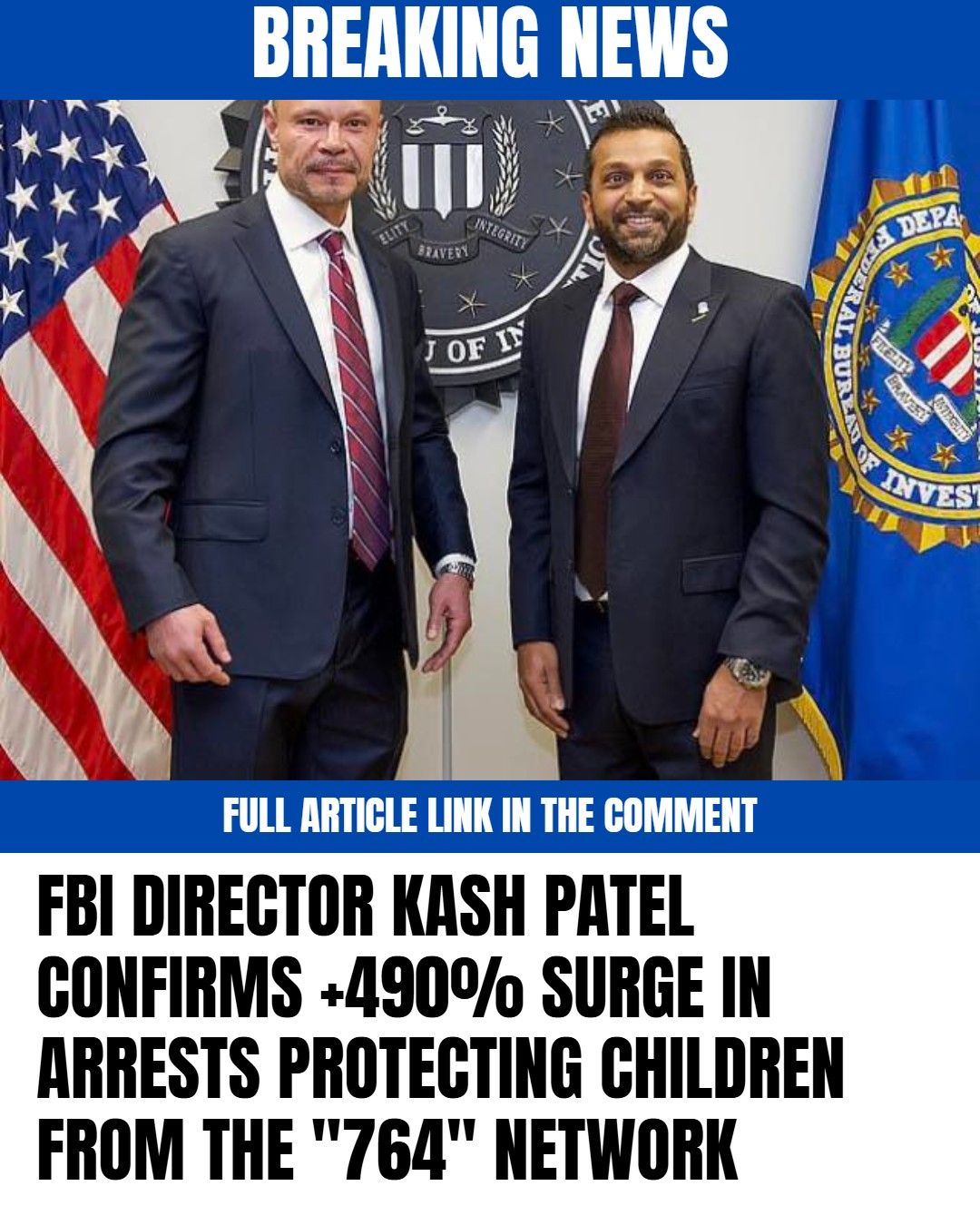
“I’m proud to announce today that the number of arrests that this FBI has against 764 network this year alone is up 490% from the same time last year,” Patel said, his voice steady as he detailed the bureau’s pivot to Nihilistic Violent Extremism (NVE), a label for groups unbound by traditional ideology but united in hatred for society. The surge, driven by operations like Restore Justice that rescued 115 children and arrested 205 offenders in May 2025, reflects a coordinated assault across 55 field offices, with agents posing as minors in Discord lobbies and raiding servers in basements from Baltimore to Bakersfield. For Patel, a father whose own children inspire his resolve, it’s deeply personal: “This FBI is fully engaged in dismantling NVE networks and violent groups like 764—who prey on young children using online platforms like gaming systems or social media.” The numbers, drawn from CyberTipline reports that jumped 200% to 1,300 in 2024, paint a picture of progress amid peril—a lifeline for families like Mia’s, where a single alert turned dread into deliverance.
The 764 network, a hydra born in 2021 from the ashes of the Texas-based CVLT group—named for its 764 area code—operates as a decentralized collective of nihilists who target children through the innocent portals of Roblox, Minecraft, and Discord, luring them with shared screens and “challenges” that escalate from dares to devastation. Founded by teen Bradley Cadenhead, sentenced to 80 years in 2023 for running CVLT’s precursor, 764 splintered into international offshoots, its members trading “proof” of crimes—self-harm videos, animal abuse clips, explicit photos—for status in encrypted vaults. Europol’s 2025 organized crime report labeled it a “violent, extremist child abuse ring,” its accelerationist goals to “corrupt society” manifesting in sextortion that has driven documented suicides, per NCMEC data. The April 30, 2025, indictments of leaders Leonidas Varagiannis (“War”), 21, from Greece, and Prasan Nepal (“Trippy”), 20, from North Carolina, exposed eight victims aged 13, coerced across jurisdictions into producing child sexual abuse material (CSAM). “764 is a network of nihilistic violent extremists who engage in criminal conduct… seeking to destroy civilized society through the corruption of vulnerable populations,” U.S. Attorney Edward R. Martin Jr. said, his affidavit detailing a guide for extortion that left kids isolated and terrified. For Mia, the grooming started with a “cool build” compliment in Roblox, blooming into demands for selfies, then threats if refused—”send it or everyone sees your secrets.” Her mother’s check, a routine born of instinct, led to an FBI tip that dismantled a cell, rescuing three girls including Mia, now in therapy where she draws “strong me” pictures to reclaim her smile.
Patel’s blueprint, blending tech and tenacity, deploys AI to flag keywords like “challenge” in chats, undercover ops in game lobbies, and tips from the CyberTipline’s 36 million 2024 reports—a 20% jump. Project Safe Childhood, revived under his watch, coordinates 55 offices with CEOS, yielding 205 arrests in Restore Justice’s May blitz. “No predator is out of reach,” Patel vowed, his words a lifeline for parents like Mia’s mom, who now advocates for school assemblies on digital safety. Yet challenges persist: Platforms’ encryption shields servers, splinter groups like MKU evade takedowns, their reach global with 250 U.S. probes. In May 2025, Patel called 764 “deeply disturbing” before Congress, his testimony on 300 cases a call for cross-platform vigilance. Europol’s November Finnish arrests underscore the borderless threat, a reminder that 764’s non-hierarchical structure breeds copycats, from Texas basements to overseas servers.
The human core lies in rescues like Mia’s, now 15 and thriving in art class, her brushstrokes reclaiming joy. For her, and 6,000 others pulled from darkness, it’s proof vigilance saves—not just lives, but innocence. Parents bear the burden: A Virginia mom monitoring Roblox found grooming, her 911 call sparking a bust rescuing three. “I thought games were fun—now I check every notification,” she said, her vigilance a badge of love amid fear. In Baltimore, a 13-year-old coerced into self-harm videos was saved by an FBI “friend” who revealed her badge; in Arizona, an 11-year-old extorted for nudes found freedom through a tip. These stories, from NCMEC’s 1,300 2024 reports—a 200% jump—highlight the toll: Suicides, isolation, trust shattered in worlds once safe.
Patel’s FBI, with its frontline focus, has played a role, but the true story lies in lives like Mia’s: Mothers breathing easier, communities mending, a nation inching toward safety. In this season of thanks, the surge isn’t data—it’s dinners uninterrupted, dreams unbroken, a quiet victory for everyday heroes holding the line.