State Department’s Order to Shred Prepared Documents Strands Families at Risk Under Taliban Rule, Sparking Backlash and Heartache
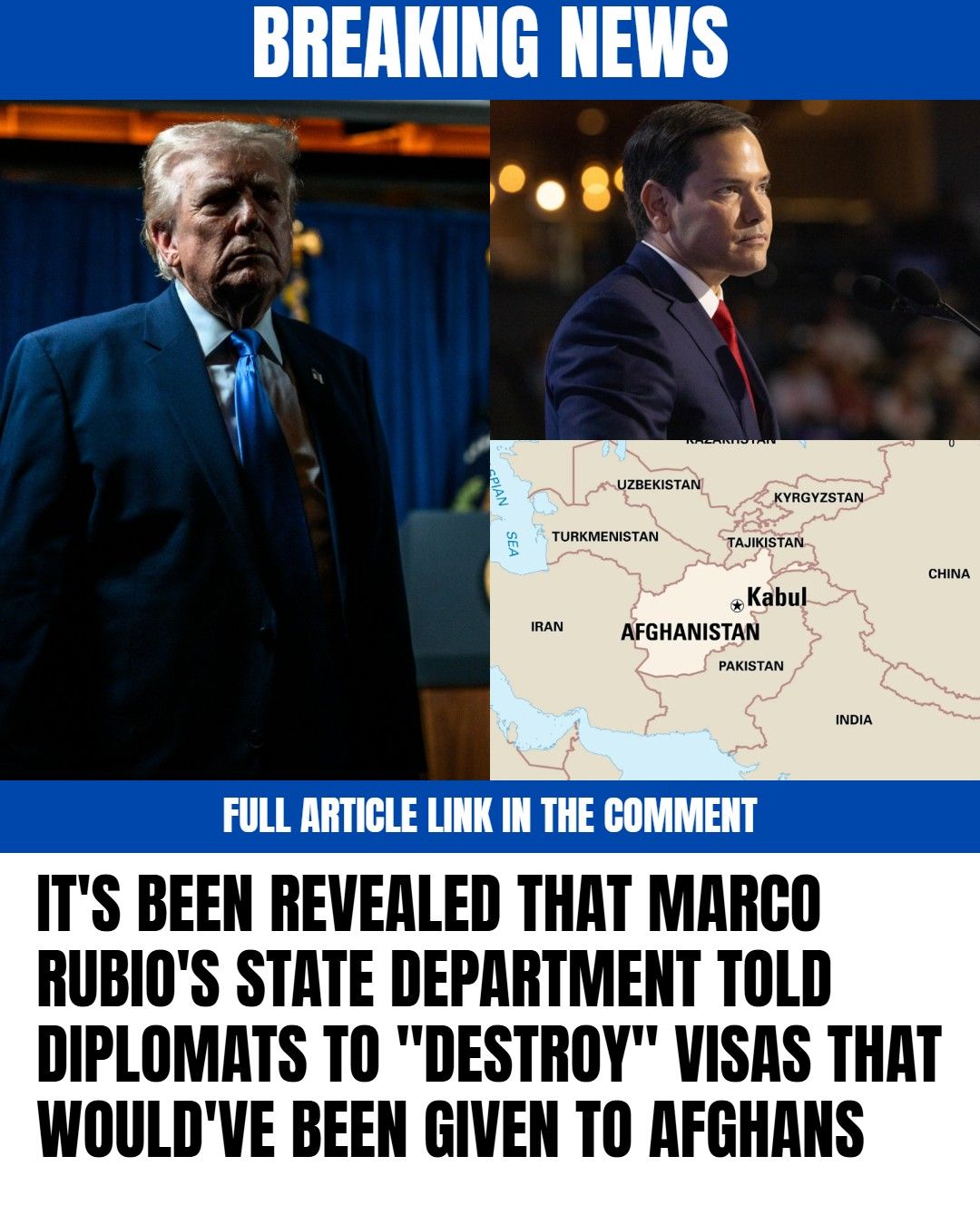
The dusty streets of Kabul, where the Hindu Kush mountains loom like silent sentinels under a November sky, felt a world away from the fluorescent-lit waiting room of a U.S. embassy in Doha on November 28, 2025, where 32-year-old Afghan translator Fatima Rahman clutched a crumpled visa packet, her hands trembling as a consular officer delivered the news: Her Special Immigrant Visa (SIV)—approved after years of paperwork and peril for aiding American forces—was no longer valid. Rahman, who had dodged Taliban threats for four years while interpreting Pashto under fire in Helmand Province, stared at the officer in disbelief, her 6-year-old son tugging at her burqa as the weight of betrayal sank in. “I risked everything for your country—translated secrets that saved lives. Now, you tear it up?” she whispered, her voice a fragile thread of the courage that once kept U.S. patrols safe. Hours earlier, Secretary of State Marco Rubio had issued a directive to diplomats worldwide: Destroy prepared SIVs for Afghans and conduct interviews without issuing approvals, regardless of outcomes—a policy revealed in a New York Times report on November 28, citing State Department cables. For Rahman and over 70,000 Afghan allies who supported U.S. efforts since the 2021 withdrawal, the order arrived as a gut-wrenching reversal, stranding them in limbo amid Taliban reprisals and a nation still mourning the three National Guard troops killed in a D.C. ambush the day before. In a holiday season of thanks, the freeze evokes a profound sorrow—a promise of sanctuary shattered, leaving families to confront the shadows they fled, their stories a quiet plea for the America they once believed in.
Fatima Rahman’s odyssey, one of quiet heroism amid war’s roar, began in the sun-baked villages of Helmand, where she joined the ranks of Afghan interpreters in 2017 at age 24, her fluency in English and Pashto making her indispensable to U.S. Marines navigating Taliban ambushes and village councils. For four years, she shadowed patrols, her notebook capturing nuances that saved lives—from defusing IED tips to brokering ceasefires with elders—earning her the nickname “Eagle Eye” from her American handlers. “She was our bridge—risked her family for ours,” recalled retired Marine Capt. David Ellis, who vouched for her SIV in 2022, his voice thick with regret as he read the Times report from his Virginia home. The 2021 withdrawal left Rahman hiding in a Kabul safe house, Taliban knocks echoing as she burned documents and fled with her son to Pakistan, her visa application a lifeline submitted amid the airlift chaos that rescued 123,000. Approved in June 2024 after 1,200 days of backlog, her packet—stamped and ready for the Doha interview—represented freedom: A job in Virginia libraries, English classes for her boy, a chance to rebuild without fear. But Rubio’s cable, sent November 26 in the wake of the Farragut Square shooting where Afghan Rahmanullah Lakanwal allegedly gunned down three Guardsmen, instructed consulates to “destroy” such documents and deny issuance, regardless of interviews. “Conduct scheduled interviews, but do not issue visas irrespective of outcome,” the directive read, a policy that left Rahman to return to Pakistan’s refugee camps, her son’s questions—”When home?”—a dagger of delay.
The shooting that triggered the order unfolded with shattering suddenness in Farragut Square on November 26, a downtown green space two blocks from the White House alive with lunch-hour strollers when Lakanwal approached three West Virginia Guardsmen from behind a bench. Lakanwal, who entered the U.S. in September 2021 via the SIV after working as a security contractor in Kandahar, fired four rounds from a .357 Magnum, striking Sgt. Michael Harlan, 28, fatally in the chest and Staff Sgt. Elena Vasquez, 32, in the upper body. Specialist Sarah Beckstrom, 20, took bullets to the abdomen and shoulder, her dropped sidearm seized by Lakanwal as he advanced yelling “Allahu akbar.” In a heartbeat of heroism, a nearby Guard major lunged with a pocket knife to stab him during a reload, allowing Sgt. Marcus Hale from Virginia to fire disabling shots into Lakanwal’s legs and buttocks. Harlan and Vasquez succumbed en route, while Beckstrom fought for 28 hours before passing on November 27, her father Gary at her bedside in MedStar Washington Hospital Center, his voice breaking as he confirmed the news. “She squeezed my hand this morning—fought like hell. But it’s a mortal wound; she’s at peace now,” Gary told reporters, his hand never leaving hers as Lisa, Sarah’s mother, prayed over speakerphone from Beckley with their other children, their voices mingling in a plea for one more miracle.
Rubio’s directive, detailed in the Times report citing cables from November 26, extends the administration’s post-shooting crackdown—a USCIS halt on all asylum decisions announced by Director Joseph Edlow on November 28, and a State Department suspension of Afghan passport visas. The SIV program, created post-2021 withdrawal to aid over 70,000 Afghans who supported U.S. forces, has processed 140,000 entries since then per DHS data, but the order strands thousands in interviews, their packets shredded without recourse. “This is betrayal— we stood with you, now you abandon us,” Rahman said from Doha, her voice a whisper over a crackling line as embassy staff conducted her “interview,” a formality ending in denial. Rahman’s handler, Ellis, echoed the sentiment: “Fatima saved my team’s lives—risked her own for ours. Shredding her visa? It’s a slap to everyone who fought beside us.” The policy, part of Trump’s “sovereignty doctrine,” prioritizes “maximum vetting” amid the shooting probe, where Lakanwal’s lapsed green card from 2024 backlogs flagged in a June Justice report raises questions about rushed 2021 approvals.
For Afghan allies like Rahman, the freeze means a return to peril—Taliban reprisals claiming 500 SIV applicants since 2021 per Human Rights Watch, families hiding in Pakistan camps with $50 monthly stipends. “My son’s school fees are gone— we eat rice now, dream of bread,” Rahman confided, her son’s drawing of an American flag taped to the wall a fragile talisman. Advocates like No One Left Behind report 5,000 pending SIVs frozen, their clients—interpreters, cooks, drivers—facing death threats without U.S. refuge. “These are our brothers in arms—revoking their visas betrays that bond,” said founder Sarah Miller, her voice weary from appeals for 10,000 since 2021.
Public response weaves grief with resolve, a nation pausing amid holidays to ponder protection’s price. In Beckley, 1,500 lit candles at Sarah’s vigil, singing “God Bless America”; in Charleston, Luca placed a drawing of his mom with wings. GoFundMe topped $2.1 million, from Guardsmen to Brad Paisley. Social media, under #JusticeForGuardsmen, trended with 6.2 million posts—photos of Beckstrom’s cap, Harlan’s sketches.
Trump hailed the order as “putting America first,” directing 500 additional troops to D.C. Rubio, in a Foggy Bottom briefing, called it “necessary vigilance.” Critics like Sen. Jeanne Shaheen decried “overreach,” her SIV bill stalling.
As December dawns, the freeze unfolds in reckonings—Rahman packing for Pakistan, Gary planning Sarah’s funeral. Rubio’s directive, raw as war’s echo, invites reflection: Allies like Rahman deserve every chance, their visas not paper, but promises kept.