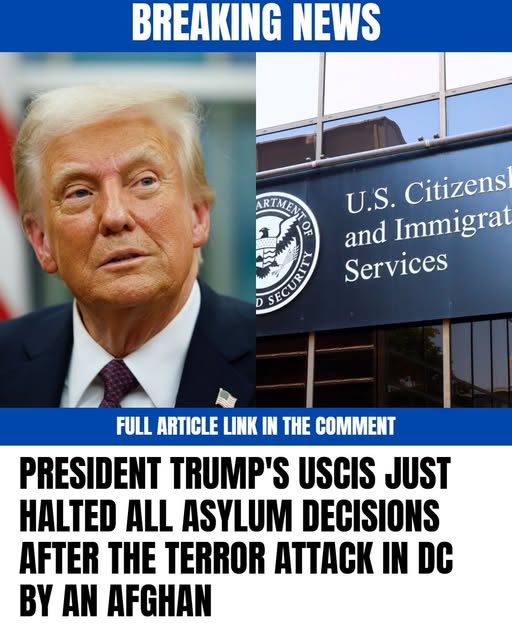
After Deadly DC Shooting, USCIS Freezes Decisions for All Claimants as Families Face Uncertain Futures Amid Vetting Overhaul
The faint glow of a laptop screen illuminated the small living room of a Phoenix apartment on the evening of November 28, 2025, where 34-year-old Venezuelan teacher Sofia Ramirez sat with her two young daughters, their bedtime stories interrupted by a notification that turned hope to heartache. Ramirez, who fled Caracas’s collapsing economy and political violence in 2023 with dreams of stability for her family, had filed for asylum six months earlier, her application a lifeline to work permits and a chance to teach English without the shadow of deportation. But the U.S. Citizenship and Immigration Services (USCIS) alert—announcing an immediate halt to all asylum decisions “until we can ensure that every alien is vetted and screened to the maximum degree possible”—froze her world in place, the words blurring through tears as her 7-year-old asked, “Mama, does this mean we go home?” For Ramirez and thousands like her, the directive, issued by USCIS Director Joseph Edlow on November 28 in the wake of a fatal shooting of three National Guard troops near the White House, arrived as a gut-wrenching pause—a sudden suspension of the American promise that has drawn 2.2 million asylum seekers into a backlog already stretching years. In a nation built on refuge, the freeze evokes a profound tenderness for those caught mid-journey, their stories of flight and fortitude now suspended in the balance of security’s stern gaze.
The shooting that prompted the halt unfolded with shattering suddenness in Farragut Square on November 26, a downtown green space two blocks from the White House where lunchtime crowds scattered like leaves in wind as Rahmanullah Lakanwal, a 29-year-old Afghan immigrant, allegedly approached three West Virginia Guardsmen from behind a bench. Lakanwal, who entered the U.S. in September 2021 via the Special Immigrant Visa after working as a security contractor for American forces in Kandahar, fired four rounds from a .357 Magnum revolver, striking Sgt. Michael Harlan, 28, fatally in the chest and Staff Sgt. Elena Vasquez, 32, in the upper body. Specialist Sarah Beckstrom, 20, took bullets to the abdomen and shoulder, her dropped sidearm seized by Lakanwal as he advanced yelling “Allahu akbar.” In a heartbeat of heroism, a nearby Guard major lunged unarmed with a pocket knife to stab him during a reload, allowing Sgt. Marcus Hale from Virginia to fire disabling shots into Lakanwal’s legs and buttocks. Harlan and Vasquez succumbed en route to hospitals, while Beckstrom fought for 28 hours before passing on November 27, her father Gary at her bedside in MedStar Washington Hospital Center, his voice breaking as he confirmed the news. “She squeezed my hand this morning—fought like hell. But it’s a mortal wound; she’s at peace now,” Gary told reporters, his hand never leaving hers as Lisa, Sarah’s mother, prayed over speakerphone from Beckley with their other children, their voices mingling in a plea for one more miracle.
Lakanwal’s alleged rampage, probed as a terrorism incident with FBI raids yielding a journal of “targets” and encrypted files, has cast a long shadow over the immigration system that brought him stateside. Arriving amid the 2021 Afghanistan withdrawal’s frenzy through Operation Allies Welcome, which airlifted 123,000 and resettled 76,000, Lakanwal’s SIV bypassed full vetting due to urgency, a gap flagged in the June 2025 Justice Department report on the program’s lapses. His green card lapsed in 2024 amid backlogs, and neighbors in Anacostia recalled him as “reserved but kind,” a man who coached youth soccer but kept to himself. Stabilized after surgery at George Washington University Hospital, he remains silent under guard, his 3,000-mile drive from Bellingham, Washington, traced by agents through receipts and cams. “He helped save lives—translated under fire. This betrayal… it’s a wound that doesn’t heal,” a former handler told Reuters, the pain a quiet undercurrent to the probe’s momentum.
Edlow’s announcement, posted to X at 8:45 p.m. on November 28, framed the halt as a “national security imperative,” suspending all asylum decisions—affirmative claims filed inside the U.S. and defensive ones in removal proceedings—for an indefinite period pending enhanced screening protocols. “USCIS has halted all asylum decisions until we can ensure that every alien is vetted and screened to the maximum degree possible,” Edlow wrote, the directive affecting 2.2 million pending cases per Syracuse University’s Transactional Records Access Clearinghouse data as of August 2025. The pause builds on a November 28 State Department suspension of Afghan passport visas and a review of 76,000 green cards for “countries of concern,” actions Trump hailed in a Mar-a-Lago address that evening as “putting American safety first.” “The shooting shows what happens when we rush—now, we get it right, for our Guardsmen and our families,” Trump said, his words a vow of protection amid the surge of 500 additional troops to D.C.
For Sofia Ramirez and her daughters, the halt means a limbo that feels like exile by inches. Ramirez, who arrived at the San Ysidro port in 2023 with $200 and a folder of threats from Venezuelan authorities, filed her asylum claim in Phoenix, her story of political persecution—a journalist targeted for exposing corruption—earning a credible fear interview pass. Six months in, with a work permit allowing part-time teaching and $1,200 monthly rent stretching her $2,000 income, the pause dashes hopes for adjustment of status. “My girls ask about Christmas trees—we can’t plan when tomorrow’s unknown,” she said, her voice soft in the apartment’s cozy clutter, drawings of palm trees taped to the fridge a nod to the homeland they fled. Ramirez’s case, one of 1.3 million affirmative claims in backlog, joins defensive filings in immigration courts, where waits average 4.3 years per TRAC data. Advocates like the International Rescue Committee warn of humanitarian costs: 60 percent of asylum seekers work legally during processing, contributing $5 billion annually, their halt risking evictions and family separations.
The policy’s human mosaic extends to heartland havens where refugees rebuild amid scrutiny. In Boise, Idaho, 31-year-old Syrian baker Omar Hassan, who fled Aleppo in 2018 after his shop was bombed, filed asylum in 2020, his credible fear pass leading to a bakery that employs five locals and serves pita to farmers’ markets. The pause, amid his 2025 hearing delay, means frozen wages and $800 rent hikes, his 6-year-old son asking why “Daddy can’t work more.” “I came for safety—now, it’s safety on hold,” Hassan said over dough-kneading in his sunlit kitchen, his hands dusted with flour as he described the call from his lawyer: “Prepare for the long haul.” Hassan’s story, echoed in IRC reports showing 80 percent employment among asylum seekers, highlights the economic thread: They pay $3.5 billion in taxes yearly, their halt a ripple to communities reliant on their labor.
Public response, from Capitol Hill corridors to kitchen tables, weaves resolve with unease, a nation pausing amid holidays to ponder protection’s price. In a Toledo diner, Trump supporters like 62-year-old Jim Hargrove passed phones over pie. “Overdue—the shooting shows what lax vetting costs. Trump gets it,” Hargrove said, quoting “maximum screening” as the room agreed on safer streets. Online, #SecureTheBorder trended with 2.8 million posts, stories of “revitalized communities” from rural Ohio to Florida enclaves.
Yet for others, the halt evokes profound ache, thanks soured by limbo. In a Phoenix church, 200 prayed in Spanish, Rev. Maria Gonzalez linking arms: “We’ve fled danger—now, this pause is another border we can’t cross.” Social media, under #AsylumFamilies, trended with 2 million posts—families sharing waiting room selfies, pleas for compassion from those fleeing violence.The blueprint, part of Trump’s “sovereignty doctrine,” pauses 2.2 million cases, with enhanced vetting—biometrics, social media audits—set for January 2026. “Safety first,” Edlow said, citing the shooting’s probe. Advocates like Shaheen decried “overreach,” her SIV bill stalling.
As December dawns, reviews unfold in reckonings—families packing, supporters toasting. Trump’s order, raw as holiday talk, invites reflection: Protection for all, tempered by compassion for those seeking it. In Phoenix churches and Boise bakeries, thanks endures—in hands extended, family the true haven.